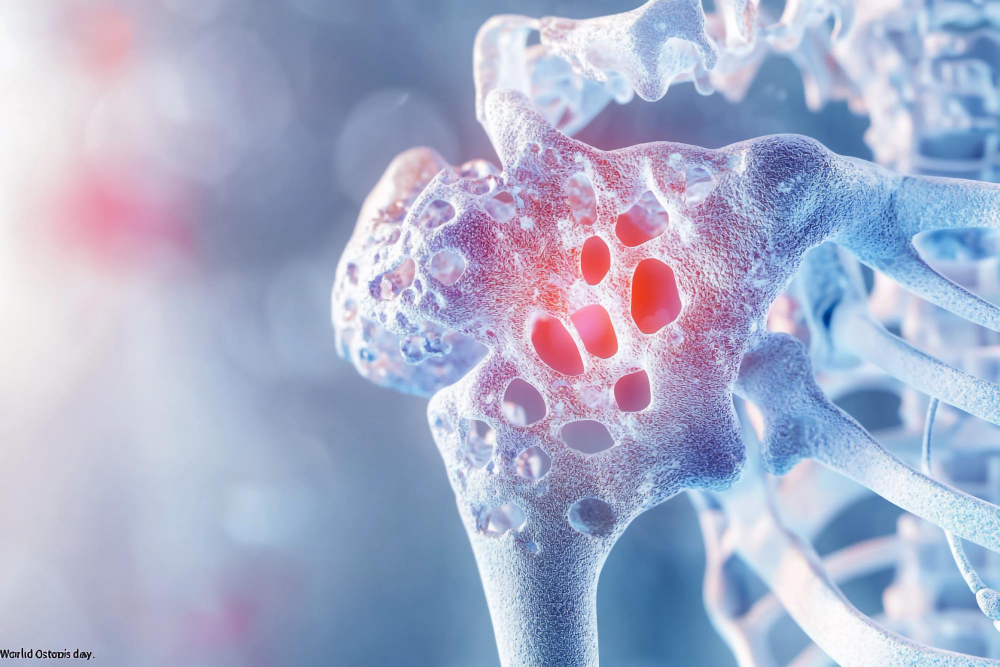
What is Osteoporosis?
Osteoporosis is a condition that weakens bones. As a result, bones become fragile and break easily. Many people call it the “silent bone disease” because it often shows no signs until a bone breaks. In fact, osteoporosis affects millions worldwide, especially older adults. Good bone health is important at every age, but it becomes even more vital as we get older. Because osteoporosis can develop slowly, many people do not know they have it until they suffer a fracture.
Symptoms of Osteoporosis
Usually, osteoporosis does not cause pain or symptoms in the early stages. However, as the disease progresses, some signs may appear. For example, you might notice:
Because these symptoms can be subtle, it is important to watch for changes in your body. If you notice any of these signs, talk to your doctor.
Causes and Risk Factors
Osteoporosis happens when the body loses too much bone, makes too little bone, or both. Over time, bones become weak. Several factors can increase your risk of osteoporosis. For instance, some common causes and risk factors include:
Because some risk factors cannot be changed, it is important to focus on what you can control. Eating well and staying active can help protect your bones.
How Osteoporosis is Diagnosed
Doctors use special tests to check for osteoporosis. Most often, a bone density test (DEXA scan) is used. This test measures how strong your bones are. It is quick, painless, and safe. Sometimes, your doctor may also ask about your medical history or order blood tests. Early diagnosis is key. That way, you can start osteoporosis treatment and prevention before a fracture happens.
Treatment Options
There are several ways to manage osteoporosis. Your doctor may suggest:
Because each person is different, your treatment plan may vary. Always follow your doctor’s advice for the best results.
Lifestyle Tips and Prevention
While you cannot change your age or family history, you can take steps to lower your risk. For example, try these tips for better bone health and osteoporosis prevention:
Because small changes can make a big difference, start today to protect your bones.
When to See a Doctor
If you have risk factors for osteoporosis or notice symptoms, see your doctor. Early action can help prevent serious problems. For example, talk to your doctor if you:
Because osteoporosis can be managed, regular check-ups are important. Your doctor can guide you on osteoporosis treatment and prevention based on your needs.
In summary, osteoporosis is a silent disease that can weaken bones without warning. However, with early diagnosis and the right steps, you can protect your bone health. Consult Manmeet Doctor for advice tailored to you.